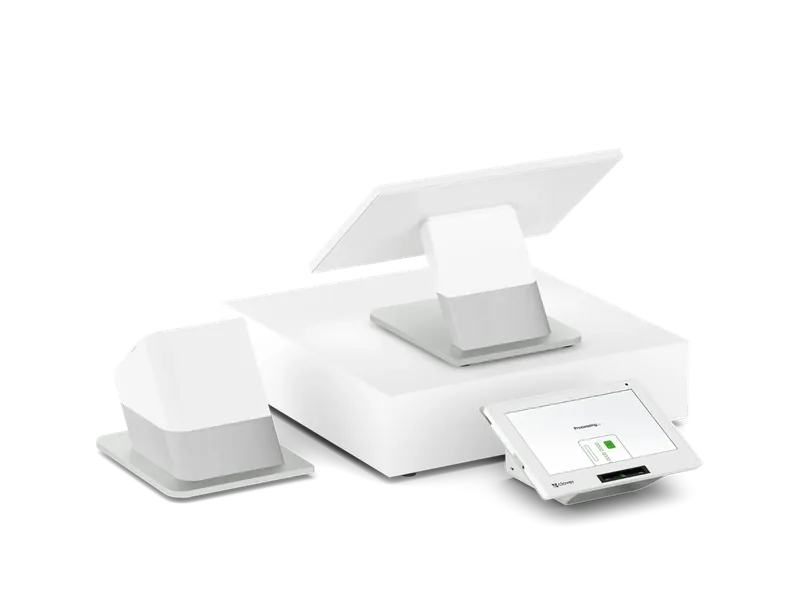
Dual-screen station
Clover Station Duo
On the bar, where guests order and pay standing up: staff ring the pour while the guest tips and pays on a screen of their own.
Point of sale for breweries and taprooms
Stratamize sets up Clover for breweries and taprooms: a tap list that changes with the kegs, tabs that follow guests outside, and cans and merchandise rung up on the same ticket as the pints.
About two minutes. Our team follows up.
What we set up
A taproom sells the same beer several ways. One guest wants a taster, the next a full pour, the next a flight of four, and someone at the end of the bar wants a four-pack and a shirt to take home. The tap list changes whenever a keg kicks. A register built around a fixed cocktail menu does not fit that well; one built around your tap list does.
Stratamize sets Clover up for the way a brewery sells: each beer with its pour sizes, flights as their own item, packaged beer and merchandise with stock counts, tabs that work at the bar and in the beer garden, and the merchant account for all of it. We set up the devices and train your taproom staff before a release day, not during one.
This page is for breweries and taprooms. A cocktail bar or a lounge is better served by the bars page.
Where we set this up. Anywhere in the U.S., by phone: we ship your devices ready to use and train your staff on a call. In Coweta County and metro Atlanta our team installs on site, including Atlanta. See all service areas.
Recommended devices
Which devices, and how many, depends on your counter and your floor. We adjust it with you before you buy anything.
Dual-screen station
On the bar, where guests order and pay standing up: staff ring the pour while the guest tips and pays on a screen of their own.
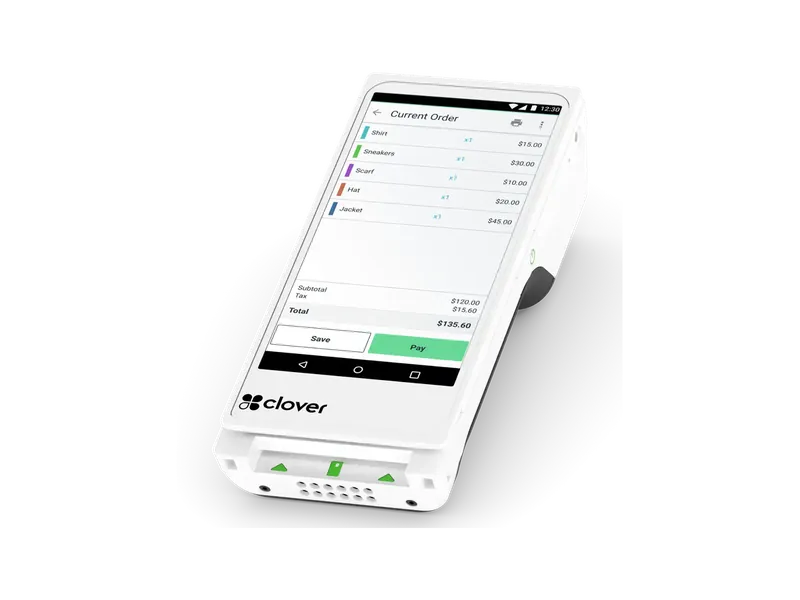
Handheld with printer
The handheld for the beer garden, a second bar on busy days and the line on a release day.
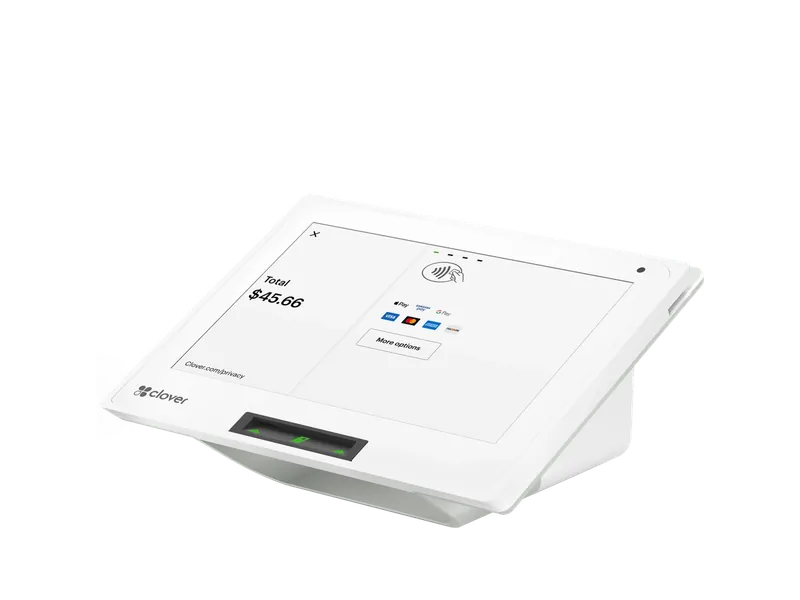
Countertop POS
A compact register for the merchandise and to-go counter.
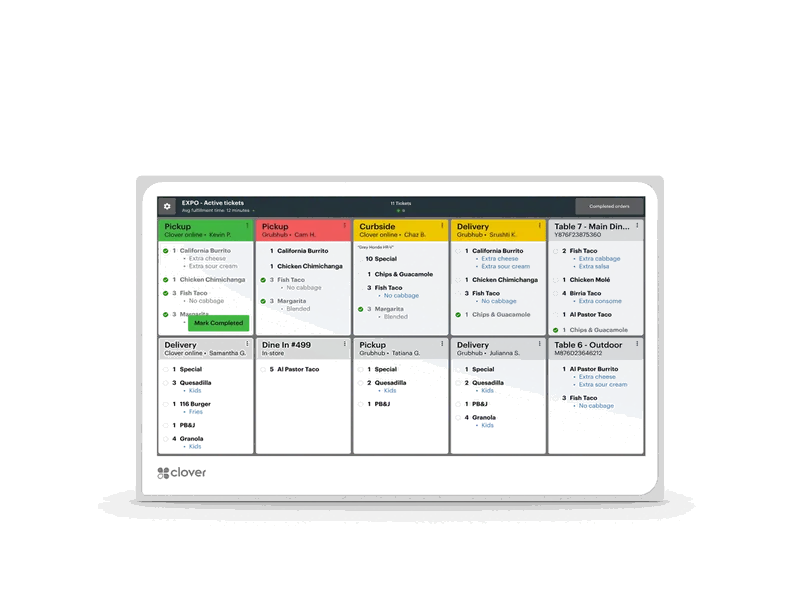
Kitchen screen
Only if you run a kitchen: food orders on a screen on the line.
How it works
Answer a few questions and confirm your email, then finish a short checklist. It asks for your business details, never your customers’ card numbers.
Underwriting reviews your merchant account, and we keep you posted until it is decided.
After approval we set up your Clover, test a live sale and a refund, and train your staff.
We build each beer as one item with the sizes you pour, such as a taster, a half pour and a full pour, each at its own price. A flight is set up as its own item where the bartender picks the beers, so it rings in a few taps and each beer still shows on the ticket. Packaged beer, growler fills and merchandise are separate items with their own stock counts. Bring your tap list and your to-go price sheet and we will lay the screen out to match the board behind your bar.
It should not be. We set the menu up so that a rotating tap is a quick edit, not a rebuild: a standing set of pour sizes that a new beer inherits, and categories for core beers, seasonals and guest taps. During training we have your manager swap a beer in and out on your own devices and check that every register shows the change, so the first real one is not a guess.
Yes. Clover's bar and brewery page describes starting a tab and pre-authorizing the card so checkout is quick at the end, and splitting a bill with an itemized receipt for each guest. The same page describes taking orders at the bar, at the table, in the crowd or on the patio.
What matters in a taproom with no table service is how staff find the tab again. We decide that with you during setup: by name, by card or by a table or zone number, and what happens to tabs still open at close.
Clover's bar and brewery page says payments can still be accepted if the Wi-Fi stops, and that those sales are reconciled once the connection returns. It also describes the Clover Flex handheld as taking payments with or without Wi-Fi. Offline payments carry some risk, because a card cannot be checked until the device is back online, so we go through the limits with you. We also look at your coverage outdoors during setup; fixing the signal is usually better than relying on offline mode.
We usually put a Clover Station Duo on the bar of a taproom. Guests order and pay where they stand, and the screen facing them shows the total and the tip prompt. A Clover Flex covers the beer garden, a second bar on busy days and the release line.
A Clover Mini makes a compact register for a merchandise and to-go counter. If you have a kitchen, a Kitchen Display sends food orders to the line. A taproom that relies on a visiting food truck does not need one; the food trucks page covers the truck's own setup.
The register does not check an ID by itself. Clover's bar and brewery page points to age verification apps that integrate with the register. If you want an ID scanned at the door or at the bar, we tell you which apps cover that and what each adds to the monthly cost. Your license and your insurer set what you are required to do; tell us what they expect and we set the register up to support it.
Mostly, yes. Clover's bar and brewery page lists a rewards program for repeat guests and both digital and physical gift cards. Merchandise and packaged beer sit in the same inventory as the draft list, with stock counts. A mug club with its own rules, such as a member price on every pour or a larger pour at the same price, may need an App Market app or a member discount that staff apply. Bring your club rules and we will show you how they would run before you commit.
Yes, for sales in the taproom. The prices on your board are the card prices, and guests who pay cash get 3.5% off for cash. Credit and debit guests pay the posted price, and nothing is added at the register. We set up the program and the signs for your entrance and your bar.
Sources
Clover details come from Clover’s own pages, as of the date shown. Clover may change them.
Point of sale
We match the devices to how you sell, set them up with your merchant account and train your staff.
Approvals usually come back within hours, three days at most.
Book a call